


A fast closing starts long before the closing documents arrive.
Ready to move from term sheet to funding? Talk to an Asteris Lending advisor about your rental property financing.
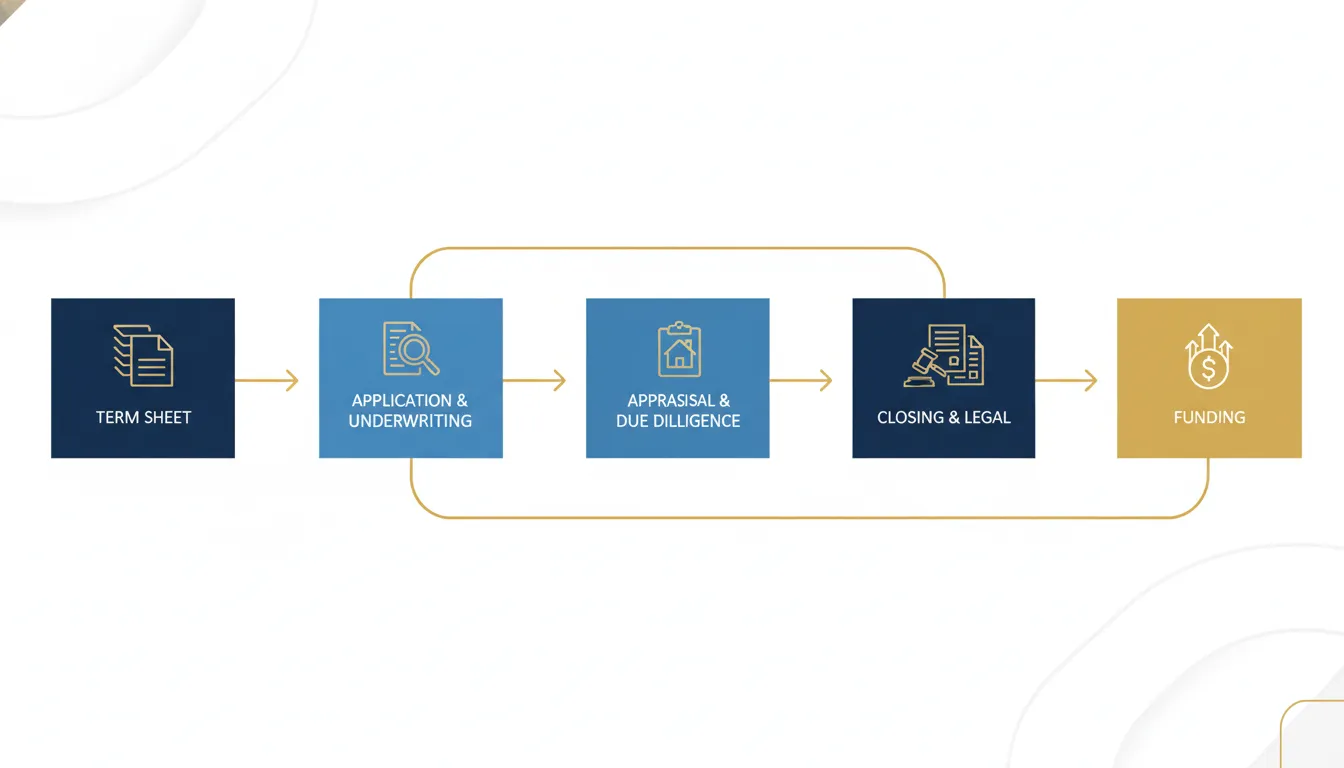
A typical DSCR loan closing timeline moves from term sheet to funding through document collection, third-party reports, underwriting, final approval, and settlement. A straightforward, well-prepared file may move quickly, while appraisal scheduling, title issues, insurance requirements, or incomplete borrower documents can extend the process. Investors have the most control over speed when they submit an accurate package, authorize third-party work promptly, and respond to underwriting conditions without delay. The lender and closing team still need enough time to verify the property, confirm the transaction structure, clear conditions, and prepare final documents.
The most useful way to plan is to understand what happens at each stage, who owns the next action, and which problems can hold up funding. Here is what a typical DSCR loan closing timeline looks like.
What is a typical DSCR loan closing timeline?
A DSCR closing is a sequence, not a single underwriting event. The exact pace varies by lender, property, transaction structure, and the readiness of the loan file. A clean purchase or refinance with responsive parties can move faster than a deal with title defects, incomplete entity records, or an appraisal that requires follow-up.
| Stage | What happens | What the investor can do |
|---|---|---|
| Term sheet and application | Review proposed economics, property details, and initial requirements. | Confirm the structure and submit complete, accurate information. |
| Third-party orders | Appraisal, title, insurance, and other required reports begin. | Authorize orders promptly and give vendors access to the property. |
| Underwriting | The lender evaluates cash flow, property eligibility, borrower and entity details, and supporting documents. | Answer questions quickly and resolve inconsistencies. |
| Conditions and final approval | Open items are cleared and the file is approved for closing. | Track each condition and provide final documents in one complete response. |
| Closing and funding | Documents are signed, settlement requirements are met, and funds are released. | Review figures early and coordinate signatures and funds to close. |
Any timeline discussed at the start should be treated as an estimate. The closing date becomes more predictable once third-party reports are complete and underwriting conditions are cleared.
Why closing estimates change
Early estimates rely on the facts available when the investor first discusses the deal. Underwriting and third-party reports can reveal new information. A lower appraised rent, a title item, a required insurance change, or a difference in entity documents may add work. Those items do not automatically mean the deal cannot close. They do mean the team needs time to understand and resolve the issue.
Ask what assumptions support the estimated date and which milestones must occur before that date becomes firm. This creates a practical schedule based on completed work, not only an optimistic target.
From term sheet to a complete loan file
The term sheet sets the direction for the transaction. It usually summarizes proposed loan terms and the information the lender used to prepare them. Investors should review it carefully before moving forward because changes to the property, borrower entity, requested proceeds, or transaction type may affect the structure.
A same-day term sheet can help an investor assess an opportunity quickly, but it is not the same as final approval or same-day funding. The next priority is turning the initial scenario into a complete loan file.
Build the file around one consistent story
Names, addresses, ownership percentages, purchase or payoff figures, lease details, and entity documents should agree across the application and supporting materials. Small inconsistencies can create avoidable questions later.
Prepare documents before they are requested where possible. A lender may need borrower identification, entity formation and authorization records, property information, leases or rent support, purchase or payoff documents, insurance details, and information about available reserves. Exact requirements vary by transaction.
Investors seeking rental-property financing can review Asteris Lending’s rental property financing options and discuss the proposed structure before submitting a full package. Investors moving a property from renovation to stabilization may also compare fix-and-flip bridge loans with long-term rental financing before selecting an exit strategy.
How DSCR underwriting moves the file forward
Debt service coverage ratio underwriting focuses on the property’s ability to support its debt obligations from qualifying rental income. The lender also reviews the broader transaction, including the property, borrower or guarantor, ownership entity, requested leverage, reserves, and exit or operating plan.
Property cash flow and eligibility
Underwriters compare qualifying rental income with the debt service used for the loan. They also confirm that the property and its use fit the program. The calculation method, documentation, and required coverage can vary, so investors should not assume that one lender’s result will match another’s.
Borrower, entity, and transaction review
A DSCR loan may rely less on personal income documentation than a conventional consumer mortgage. But the lender still verifies who is borrowing, how the entity is authorized, and whether the transaction meets program requirements. Credit, liquidity, experience, vesting, and other factors may be reviewed. Larger operators can explore institutional portfolio lending when a multi-property strategy requires portfolio-level structuring.
Conditions are a normal part of underwriting
An underwriting condition is a request to document or resolve an open item. Conditions move faster when the response directly answers the request and includes every related document. Sending partial responses across several emails makes it harder for the team to confirm that an item is complete.
Ask for a consolidated condition list, assign an owner to each item, and confirm when each response has been accepted. That simple discipline makes the remaining timeline easier to manage.
How to respond to an underwriting condition
Start by reading the request literally. If the lender asks for an explanation and a supporting statement, provide both. If a condition is unclear, ask what fact or document will satisfy it before sending unrelated material. A focused response is easier to review and reduces another round of questions.
Keep a copy of every submitted item and note the date sent. Then confirm whether the condition is cleared, partially cleared, or still open. This workflow helps investors see which issues truly affect the expected closing date.
Appraisal, title, and insurance milestones
Third-party work often sets the pace of a DSCR closing because the lender cannot fully control vendor schedules or the time needed to resolve outside issues.
Appraisal
The appraisal supports the property’s value and may provide market rent information used in underwriting. Scheduling can take longer when a property is occupied, access is difficult, or the appraiser needs more information. Make the contact person available and provide accurate property details at the start.
Title
The title review confirms ownership, liens, taxes, judgments, and other matters that may affect the lender’s interest. Old liens, incorrect vesting, unreleased documents, or entity-name differences can delay closing. Investors should share the correct vesting instructions early and respond quickly when the title company requests documentation.
Insurance
The insurance policy must meet the lender’s requirements and use the correct borrower and property information. Coverage questions, missing endorsements, or an incorrect mortgagee clause can become last-minute blockers. Connect the insurance agent with the lending team early enough to revise the policy if needed.
Investors should track these workstreams in parallel rather than waiting for underwriting to finish before checking their status. For ground-up projects that need a different underwriting and draw process, review Asteris Lending’s new construction loans.
A simple third-party status check
For each report, track the order date, assigned vendor, access contact, expected delivery date, and open questions. A weekly status check may be enough early in the process. As the expected closing approaches, the parties may need more frequent updates.
Do not assume an ordered report is complete. Confirm that it has been delivered, reviewed, and accepted. A report can arrive on time but still require corrections or added information before the lender can use it.
What can delay a DSCR loan closing?
Most delays fall into two groups: issues the investor can help prevent and issues that require third-party resolution.
- Incomplete or inconsistent documents: Missing signatures, outdated entity records, or conflicting ownership information create follow-up work.
- Appraisal access or review issues: Scheduling problems, property-condition questions, or requested revisions can hold up the file.
- Title defects: Liens, vesting problems, probate matters, or unreleased documents may need legal or settlement work.
- Insurance gaps: Incorrect names, insufficient coverage, or missing lender requirements can delay final approval.
- Changes during underwriting: A new borrower entity, loan amount, property use, or transaction structure can require the file to be reviewed again.
- Slow condition responses: Every day an open request sits unanswered can move the expected closing date.
The best prevention tool is a shared closing checklist with clear owners and deadlines. Keep the lender informed when a third party cannot meet a requested date. Early notice creates more options than a surprise shortly before closing.
Separate urgent items from important items
Not every open task has the same effect on closing. Ask which items block underwriting, which block final approval, and which only need to be ready before signing. Complete the critical-path items first while continuing to move other tasks forward.
This approach improves communication with sellers, brokers, and partners. Instead of saying the loan is still in process, the investor can explain what milestone is complete and what must happen next.
How can investors help close a DSCR loan faster?
- Confirm the loan structure first. Make sure the borrower entity, transaction type, requested proceeds, and property details are correct before ordering reports.
- Submit one complete package. Organize documents, use clear file names, and check that names and figures match.
- Authorize third-party work promptly. Delayed appraisal or title orders compress the rest of the schedule.
- Make property access easy. Give appraisers and inspectors a reliable contact and clear access instructions.
- Respond to conditions in full. Ask questions if a request is unclear, then send a complete response instead of fragments.
- Coordinate title and insurance early. Verify vesting, entity names, coverage, and lender details before final documents are prepared.
- Review closing figures before signing. Raise questions early enough for the closing team to investigate and revise documents.
These steps reduce preventable friction, but they cannot guarantee a specific funding date. Appraisal availability, title resolution, underwriting review, and settlement requirements remain important dependencies.
Have a property and target closing date in mind? Contact Asteris Lending to discuss the structure and next steps.
Use one source of truth
A single checklist or shared tracker can prevent missed requests. It should list every open item, responsible party, due date, and current status. Update it after each meaningful conversation with the lender, title company, insurance agent, or appraiser.
Fast responses matter, but accurate responses matter more. Taking a few extra minutes to verify a document can prevent a much longer delay caused by conflicting information.
Final approval, closing documents, and funding
Once third-party reports and underwriting conditions are cleared, a straightforward file may move from final approval through document preparation, signing, and funding within several business days. The exact schedule still depends on settlement coordination, final figures, document execution, and lender authorization.
Final approval means the lender has completed its review and the remaining closing requirements are defined. The closing team then prepares documents and coordinates with the settlement agent, title company, borrower, and other parties.
Before signing, investors should verify the borrower and vesting names, loan amount, interest and payment terms. Required reserves or escrows, fees, payoff or purchase figures, and instructions for bringing funds to closing. Ask about anything that does not match the expected structure.
Signing is not always the same moment as funding. The settlement agent may still need original documents, borrower funds, title confirmation, or lender authorization before money is released. Build that distinction into purchase contracts, payoff planning, and communications with other parties.
A strong lender keeps the investor informed about open items, the expected sequence, and who owns the next action. Asteris Lending combines investor-first underwriting with institutional capital and boutique service to help borrowers navigate that process.
Frequently asked questions
How long does it take to close a DSCR loan?
The timeline varies by lender, property, file completeness, and third-party work. A clear estimate becomes more reliable after appraisal, title, insurance, and underwriting conditions are complete.
Can a DSCR loan close quickly?
It can move quickly when the file is accurate, the property is eligible, third-party reports arrive on time, and conditions are answered promptly. Investors should avoid treating an early estimate as a guarantee.
Does a term sheet mean the DSCR loan is approved?
No. A term sheet outlines proposed terms based on initial information. Final approval depends on underwriting, third-party reports, and satisfaction of the lender’s conditions.
What documents commonly slow down a DSCR closing?
Common trouble spots include incomplete entity records, inconsistent borrower or property details, missing lease or rent support, title documents, and insurance items.
What happens after final approval?
The closing team prepares documents, confirms settlement requirements, coordinates signatures, and authorizes funding after all required items are satisfied.
Plan your rental loan closing with Asteris Lending
A predictable closing starts with the right structure and a complete file. Asteris Lending offers boutique service, investor-first underwriting, and access to institutional capital for real estate investors.
Contact Asteris Lending to request a term sheet and talk with a lending advisor about your transaction. Brokers and industry professionals can also learn about the referral partner program.
