

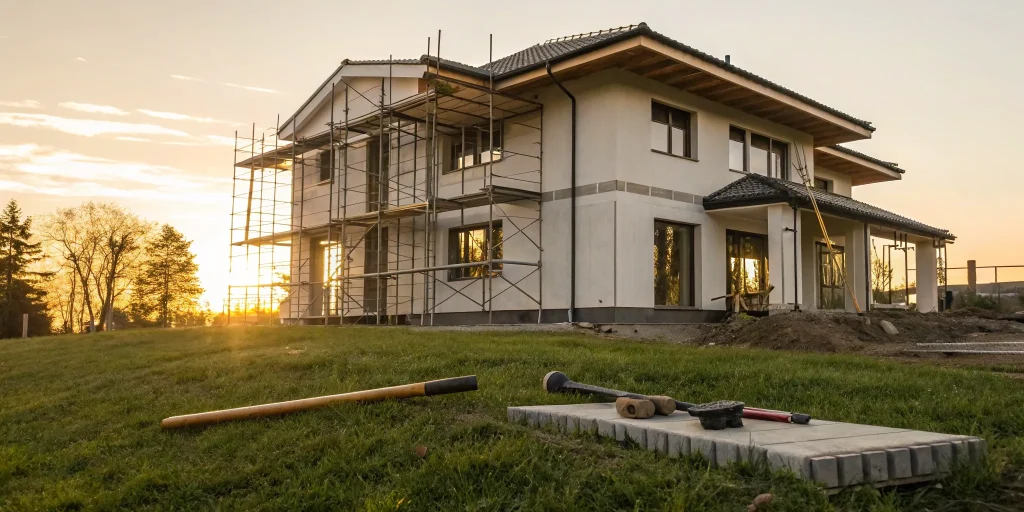
As a real estate developer, building on spec is the ultimate creative outlet. You call all the shots—from the architectural design to the final finishes—crafting a home perfectly suited for today’s buyers. But that vision needs capital to become a reality, and funding a project without a buyer’s contract can be tough. This is where a specialized spec home loan becomes your most important tool. We’ll break down how this financing works, what you need to qualify, and how to build a strong application that sets your next project up for success.
Key Takeaways
- Choose a Loan That Fits Your End Goal: Use a short-term construction loan for a quick sale, as it’s designed for the build-and-sell cycle. If you plan to rent the property, have a clear path to refinance into a long-term mortgage once the project is finished.
- Present a Lender-Ready Project Plan: Go beyond personal financials by providing a detailed project blueprint. A thorough budget, construction schedule, and contingency fund show lenders you’re a capable partner managing a sound investment.
- Proactively Manage Project Risks: Protect your profit margin by planning for the unexpected. This means researching the market to time your build correctly, using detailed contracts to prevent disputes, and maintaining cash reserves to cover delays or cost overruns.
What Exactly Is Spec Home Financing?
Spec home financing is a type of loan used to build a new house without a specific buyer already lined up. The term “spec” is short for speculative, meaning you, the builder or investor, are building the home with the expectation of selling it for a profit once it’s complete. Think of it as flipping a house, but instead of renovating an existing property, you’re starting from the ground up. You purchase the land, manage the construction, and then list the finished home on the market.
This strategy gives you complete creative and financial control over the project. You get to make all the decisions on design, materials, and finishes based on what you believe will attract buyers in that specific market. It’s a popular path for experienced developers and investors looking to capitalize on housing demand. Securing the right new construction loan is the critical first step to bringing your vision to life and ensuring your project is profitable.
Spec Home vs. Custom Home
A spec home is built on a builder’s educated guess—or “speculation”—that a buyer will love the finished product. The builder handles everything from the floor plan to the finishes, aiming for broad market appeal. In contrast, a custom home is a partnership between a builder and a specific buyer from day one. The homeowner has a say in every detail, creating a space that’s uniquely theirs. This means spec homes are generally faster to build and often cost less due to standardized designs and bulk material orders. A custom home offers total personalization but requires more time, decision-making, and a bigger budget from the buyer.
Spec Home vs. Model Home
It’s easy to confuse a spec home with a model home, especially since they’re often found in the same new developments, but their purposes are quite different. A model home is essentially a showroom. It’s built to showcase a builder’s craftsmanship and the various floor plans and upgrade options available within a community. Its main job is to help sell *other* homes. A spec house, on the other hand, is a brand-new, move-in-ready home built with the sole intention of being sold quickly. While a model home might eventually go on the market, a spec home is built for immediate sale from the get-go.
Why Do You Need a Spec Home Loan?
The primary goal of a spec home loan is straightforward: to provide the capital needed to build a home that you can sell for more than your total investment. As the builder, you take on the financial risk of the entire project, from the initial land purchase to the final coat of paint. The loan covers the costs of construction with the understanding that you’ll find a buyer after the home is built.
This approach is especially useful for builders who want to move quickly on market opportunities without waiting to secure a custom-build contract. By financing the project yourself, you maintain control over the timeline and can build inventory that’s ready for buyers who don’t want to wait for a custom home. It’s a way to build your portfolio and establish your brand in the local real estate market.
Spec Loan vs. Traditional Mortgage: What’s the Difference?
It’s easy to confuse spec home financing with a traditional mortgage, but they serve very different purposes. A traditional mortgage is a long-term loan a homebuyer gets to purchase a finished property. In contrast, a spec construction loan is a short-term financing tool for the builder. These loans typically last between 12 and 18 months—just long enough to cover the construction phase.
Once the home is sold, you use the proceeds to pay off the construction loan in full. If you decide to keep the property as a rental, you would refinance the short-term construction loan into a longer-term financing solution, like a conventional mortgage. The key distinction is who holds the loan and for how long. With a spec home, the builder secures the short-term financing; with a custom or existing home, the buyer secures the long-term mortgage.
The Opportunity in Spec Home Building
Meeting the Demand of the Housing Market
There’s a well-documented need for new homes across the country, and this shortage creates a prime environment for spec builders. Buyers are often frustrated by bidding wars and a lack of options in the existing home market. A brand-new, move-in-ready spec home is an incredibly attractive alternative for those who don’t have the time or desire to go through a lengthy custom-build process. As an investor, you can step in to fill this void. By building inventory in desirable locations, you’re not just constructing a house; you’re providing a solution that the market is actively seeking, which can lead to a faster and more profitable sale.
Understanding Potential Profit Margins
While building without a buyer is inherently a “calculated risk,” the potential for a healthy profit margin is what draws so many investors to spec construction. In areas where housing is in high demand, a well-executed spec home can sell for a significant premium. Your profit is the difference between the final sales price and your total costs, which include land acquisition, materials, labor, and financing. The key is to manage your budget meticulously and build a home with features that appeal to the broadest possible range of buyers in your target market. When you get the formula right, the financial upside can far outweigh the initial risk.
The Importance of a Quick Sale and Holding Costs
The profitability of a spec home hinges on one critical factor: the speed of the sale. The longer a finished home sits on the market, the more it costs you. These holding costs—which include loan payments, property taxes, insurance, and general upkeep—can quickly eat into your profit margin. That’s why a successful spec project requires more than just construction expertise; it demands a sharp understanding of market timing and an effective sales strategy. A quick sale not only maximizes your return but also frees up your capital, allowing you to move on to the next project sooner.
Pros and Cons of Building Spec Homes
Like any investment strategy, building spec homes comes with its own set of advantages and challenges. On one hand, you have complete control over the project, allowing you to build efficiently and cater directly to market trends. This can lead to faster build times and potentially higher profits. On the other hand, you carry all the financial risk until a buyer is found, which means you need a solid financial plan and a stomach for uncertainty. Weighing these pros and cons is essential before you break ground. A clear-eyed assessment will help you decide if this strategy aligns with your financial goals and risk tolerance.
The Advantages for Builders
One of the biggest advantages of spec building is the potential for efficiency and cost savings. Since you’re not tied to a specific client’s wish list, you can reuse a proven, popular design across multiple projects. This standardization allows you to purchase materials in bulk, which often leads to significant discounts. Furthermore, working with a familiar floor plan allows your construction crew to work faster and more efficiently. This streamlined process means the home can be built quicker, reducing your holding period and allowing you to get your capital back faster to reinvest in the next opportunity.
The Risks to Consider
The primary risk in spec building is the significant upfront financial commitment. You have to fund the entire project—from the land purchase to the final finishes—before you have a buyer or tenant lined up. This requires substantial capital and a reliable financing partner. There’s also always a chance of unexpected construction delays or issues, which can drive up costs and hurt your bottom line. To manage these challenges, it’s crucial to have a detailed budget, a realistic timeline, and a contingency fund. Securing the right new construction loan is the first step in building a financial safety net for your project.
Finding the Right Spec Home Loan for You
When it comes to financing your spec home, you have more than one path forward. The right choice depends on your financial standing, project timeline, and overall business strategy. Think of it less like finding the one right answer and more like choosing the right tool for the job. Each option comes with its own set of terms, benefits, and considerations. Let’s walk through the most common financing routes so you can decide which one aligns best with your project goals.
Specialized Construction Loans
This is the most direct route for funding a spec build. A new construction loan is a short-term loan, typically lasting 12 to 18 months, designed specifically to cover the costs of building the home from the ground up. The funds are usually disbursed in draws as you complete different phases of construction. Once the home is built and sold, you use the proceeds to pay off the loan. If your plan is to hold the property as a rental, you can refinance the construction loan into a more traditional, long-term mortgage. This type of financing is purpose-built for spec home projects.
Can You Use a Traditional Mortgage?
While less common for spec builders, some investors use conventional construction loans from traditional banks. These often require a down payment between 5% and 20%, and you’ll need to put down at least 20% to avoid paying private mortgage insurance (PMI). This path can be a good fit if you have a strong, established relationship with a bank and a stellar credit history. However, the approval process can be slower and more rigid than with specialized lenders. It’s an option worth exploring, but be prepared for stricter requirements compared to loans designed specifically for real estate investors.
Bridging the Gap with Private Loans
What if you need to move faster than a traditional bank allows, or your financial profile doesn’t fit neatly into their box? This is where private financing and bridge loans come in. These short-term loans are offered by private lenders and are known for their flexibility and speed. While interest rates are typically higher, the trade-off is a much faster closing process and more adaptable underwriting. For experienced builders who find a great opportunity and need to act quickly, a bridge loan can be the perfect tool to secure the deal and get construction started without delay.
Bringing on Investors or Partners
Sometimes, the best way to fund a project is to bring on a partner. If you have the construction know-how but are short on capital, finding an investor to fund the build in exchange for a share of the profits can be a fantastic strategy. This approach reduces your personal financial risk and can open doors to larger projects you couldn’t tackle alone. Structuring these deals requires clear agreements and trust, but it’s a powerful way to leverage your expertise. Our capital advisory services can help you structure these kinds of complex deals to ensure they work for everyone involved.
Financing for Multi-Home Projects
If you’re ready to scale your spec building business from one-off projects to developing multiple homes at once, your financing strategy needs to evolve too. Juggling individual loans for each property is inefficient. A better approach is a “guidance line of credit,” a specialized loan that can cover the land acquisition for multiple lots under one umbrella. This simplifies the initial purchase and allows you to move quickly on market opportunities. Once the land is secured, you can then draw individual construction loans for each house as you break ground. This structure is incredibly efficient, with some lenders financing up to 100% of construction costs. For seasoned developers managing a portfolio of new builds, solutions like institutional portfolio lending are tailored for these larger-scale operations, providing the capital and flexibility needed to build and sell multiple properties efficiently.
Getting Approved: What Lenders Look For
Securing a spec home loan involves a different level of scrutiny than a traditional mortgage. Lenders are not just evaluating you; they’re also evaluating the viability of your entire project. This means you’ll need to present a solid financial profile and a well-documented, professional plan. Think of it as a business pitch—you’re showing the lender that you have the experience, resources, and foresight to see the project through to a profitable sale. The more prepared you are, the smoother the approval process will be. It’s all about demonstrating that you’re a reliable partner and that your project is a sound investment for everyone involved.
Your Financial Health and Credit Score
Before you even think about applying, you need to get your financial house in order. A strong credit profile is non-negotiable for lenders. Start by pulling your credit report to see where you stand. To build the credit necessary for a spec home loan, focus on the fundamentals: make every payment on time, keep your credit card balances low, and hold off on opening any new lines of credit. Lenders see these habits as indicators of financial responsibility, which gives them confidence that you can manage a complex construction project and its associated loan payments.
Minimum Credit Score Requirements
When you apply for a spec home loan, lenders will look closely at your credit score to gauge your financial reliability. Different types of loans have different credit benchmarks, so knowing where you need to stand is the first step in preparing your application. For a conventional loan, most lenders require a credit score of at least 620. However, aiming for a score of 660 or higher will likely get you better terms and a smoother approval process. A higher score signals to lenders that you are a low-risk borrower, which is crucial when financing a project without a buyer already in place.
If you’re exploring other routes, FHA loans offer more flexibility. You can potentially qualify with a credit score as low as 500 if you’re able to put down 10%. If your score is 580 or above, the down payment requirement can drop to just 3.5%. This leniency can be a major advantage for builders looking to keep more cash on hand for construction costs. While less common for spec builds, it’s a viable option for investors who meet the criteria and want to take advantage of the lower down payment.
For specialized construction loans—the most common financing vehicle for spec homes—the requirements are typically more stringent. Lenders often look for a minimum credit score of 680, with a score in the 700-720 range being ideal. This higher threshold reflects the increased risk a lender takes on by funding a home that has yet to be built. A strong credit history provides assurance that you can manage the project’s finances responsibly from start to finish, making you a more attractive partner for the lender.
Remember, your credit score does more than just get your foot in the door; it directly impacts your bottom line. A stronger credit profile can secure you lower mortgage rates and more favorable loan terms, which can significantly increase your project’s overall profitability. Investing time to improve your credit score before applying is one of the smartest financial moves you can make. It shows lenders you’re serious and prepared, setting the stage for a successful partnership.
What Documents Will You Need?
A spec home loan application requires more than just tax returns and pay stubs. You need to provide a complete blueprint for your project. Lenders will ask for detailed building plans, a realistic construction timeline with key milestones, and a line-item cost estimate covering everything from permits to paint. These documents aren’t just formalities; they are essential tools that help the lender assess the feasibility of your project. A thorough and professional presentation shows that you’ve done your homework and have a clear path to completion, which is exactly what a lender wants to see.
Factoring in Land and Construction Costs
A successful spec home project starts with a comprehensive budget. Lenders will want to see that you have a firm grasp on all the expenses involved. The key costs typically include purchasing the land, installing utilities, securing plans and permits, and covering all construction materials and labor. Don’t forget to factor in soft costs like architect fees, insurance, and even the marketing budget you’ll need to sell the home once it’s finished. Having a detailed breakdown of these expenses shows that you understand the financial scope of the project and have planned accordingly.
How Interest Works and Why You Need Cash on Hand
When it comes to new construction loans, you generally have two ways to handle interest payments during the build. You can make interest-only payments as construction progresses, which can save you money in the long run. Alternatively, you can opt for an “interest reserve,” where the interest payments are rolled into the loan itself and paid off at the end. While an interest reserve can help with your monthly cash flow, it ultimately increases the total cost of your loan. Whichever you choose, it’s also critical to have significant cash reserves on hand for unexpected delays or cost overruns.
Interest on Drawn Funds vs. Total Loan Amount
One of the most important distinctions in construction financing is how interest is calculated. Unlike a traditional mortgage where you receive a lump sum and start paying interest on the full amount immediately, spec home loans operate on a draw system. This means the lender releases funds in stages as you hit specific construction milestones. You only pay interest on the funds that have been disbursed, or “drawn,” not on the total loan amount you were approved for. This structure is a huge advantage for builders because it keeps your carrying costs low during the months when the property isn’t generating any income. It allows your interest payments to scale with the project’s progress, making your budget much more manageable and predictable from foundation to finish.
Understanding Common Loan Fees
Beyond the interest rate, your loan will come with several standard fees that you need to account for in your budget. An origination fee, typically a percentage of the total loan amount, covers the lender’s cost of processing your application. You’ll also see charges for an appraisal to determine the future value of the completed home, as well as inspection fees for each construction draw to verify progress. Other costs can include title insurance and attorney fees. Understanding these upfront helps you create a more accurate financial forecast, preventing surprises that could eat into your profit margin down the road.
Structuring Your Spec Home Financing
When it comes to financing your spec home, you have more than one path forward. The right choice depends on your financial standing, project timeline, and overall business strategy. Think of it less like finding the one right answer and more like choosing the right tool for the job. The structure of your loan is just as important as the amount. Lenders will look at key metrics like Loan-to-Cost (LTC), which compares the loan amount to the total project cost, and Loan-to-Value (LTV), which compares the loan to the appraised value of the finished home. These ratios help them assess the risk of the project.
The funds are typically not given to you in one lump sum. Instead, they are paid out in a series of “draws” as you hit specific construction milestones—like laying the foundation, framing the house, or installing drywall. This draw schedule protects both you and the lender by ensuring the project stays on track and on budget. A well-structured loan aligns with your construction timeline and your exit strategy, whether that’s a quick sale or refinancing into a long-term rental property loan to hold the asset in your portfolio.
Can the Loan Cover the Land Purchase?
This is a common question, and the answer is often yes. The primary goal of a spec home loan is to provide the capital needed to build a home that you can sell for more than your total investment. As the builder, you take on the financial risk of the entire project, from the initial land purchase to the final coat of paint. Many specialized lenders understand that land acquisition is a fundamental part of the process. While some traditional banks may prefer you to own the land outright, investor-focused lenders can often roll the cost of the land into the total new construction loan, provided the overall project numbers are strong.
Using Land Subordination to Your Advantage
For builders looking to maximize their capital, land subordination is a powerful strategy. In this arrangement, the person selling you the land agrees to take a secondary position to the construction lender. This means the landowner agrees to wait to be paid until after the home is sold and the construction loan is paid off. This can dramatically reduce your upfront cash requirement, as it allows you to secure financing for up to 90% of the total project cost. In some cases, it can even cover 100% of the costs if the land seller agrees to this structure. It’s a sophisticated approach that can help you leverage your funds across multiple projects.
Construction Loan vs. Traditional: Which Is Right for You?
Picking the right financing is one of the most critical decisions you’ll make for your spec home project. The loan you choose impacts everything from your cash flow during the build to your profit margin at the end. While a traditional mortgage might be what you’re most familiar with, spec home construction has its own unique financial rhythm. A standard mortgage is designed for buying a finished home, not for funding a project from the ground up. Let’s break down the key differences between a construction loan and a traditional loan so you can see which one aligns with your project goals.
Matching the Loan Term to Your Timeline
The timeline of your project is the first major clue to the right loan type. Traditional mortgages are long-term commitments, typically spanning 15 to 30 years. This structure is designed for homeowners, not for a project you intend to sell quickly. In contrast, new construction loans are short-term, usually lasting 12 to 18 months. This timeframe is specifically designed to cover the building phase. Once the home is complete, the loan is paid off, either through the sale of the property or by refinancing into a long-term mortgage if you decide to rent it out instead.
What About Loan Extensions?
Even the best-laid plans can hit a snag. Maybe the market cools down right as you’re ready to list, or unexpected weather delays the final phase of construction. This is where a loan extension comes into play. Since spec home loans are short-term, usually 12 to 18 months, an extension gives you extra time to sell the property without defaulting. Most lenders offer extension options, though they typically come with an additional fee. It’s a valuable safety net, but it’s important to understand how it will affect your overall financing costs and cut into your profit margin. Before signing any loan agreement, make sure you’re clear on the lender’s extension policy so you know what your options are if you need them.
How Much Cash Do You Need Upfront?
How much cash you need to bring to the table is another key difference. With a construction loan, lenders are focused on the project’s total cost and future value. They might finance up to 85% of the total project cost or up to 75% of the home’s anticipated finished value. This gives you a clear picture of the capital you’ll need to secure. Traditional mortgages, on the other hand, are based almost entirely on the borrower’s personal financial standing and the current value of an existing property, which doesn’t work when the property hasn’t been built yet.
The Role of Builder’s Equity
Builder’s equity is your “skin in the game,” and it’s one of the most important factors for a lender. It’s the portion of the project cost that you cover yourself, whether through cash, the value of land you already own, or other assets. This contribution does more than just cover the down payment; it demonstrates to lenders that you are fully committed to the project’s success and are sharing in the financial risk. Having substantial equity shows that you have a solid financial footing and can manage the project’s costs effectively. For any spec home financing, your equity is the foundation upon which the loan is built, proving you have the resources to handle unexpected costs and see the build through to a profitable sale.
How Will It Affect Your Cash Flow?
Managing your money during the build is crucial, and your loan structure plays a big role. Construction loans are typically paid out in draws as work is completed, and you only pay interest on the funds you’ve used. This keeps your initial payments lower. You can often choose to make interest-only payments during the construction phase, which helps preserve your cash. Some loans even offer an “interest reserve” where payments are rolled into the loan itself and paid off at the end, though this costs more in total interest. This flexibility is something you just don’t get with a traditional mortgage’s fixed monthly payments.
Plan Your Exit from the Start
Before you sign any loan documents, you need a clear exit strategy. What happens after the final nail is hammered in? If your plan is to sell the home immediately for a profit, a short-term construction loan is the perfect fit. It gets you through the build without locking you into a long-term debt. However, if you plan to keep the property and rent it out, your financing plan will look different. You’ll use a construction loan for the build and then refinance into a long-term rental property loan once you have a tenant.
Managing Risk and Avoiding Common Pitfalls
Building a spec home is an exciting venture, but it comes with its own set of challenges. The key to a successful project isn’t avoiding risk altogether—it’s about understanding and managing it. With a solid strategy, you can protect your investment and keep your project on track from groundbreaking to closing. Let’s walk through the most common hurdles and how you can prepare for them.
Timing the Market (and What to Do When You Can’t)
Success in spec building is all about timing. You’re taking a “calculated risk” that a buyer will be ready and willing to pay your price when the home is finished. This means you need to build during a period of high demand. Before you even think about a loan, do your homework on the local market. Are homes selling quickly? Are prices stable or rising? A project that looks profitable on paper can quickly become a liability if the market shifts mid-construction. Understanding these trends helps you time your build to meet market demand, not chase it.
Planning for Delays and Extra Costs
Few construction projects finish exactly on schedule and on budget. Weather, supply chain issues, and labor shortages can cause delays that eat into your profits. The best way to protect yourself is with clear, detailed contracts with your builders and subcontractors. These agreements should outline the project scope, timeline, and payment schedule. Having everything in writing minimizes misunderstandings and gives you a clear path forward if things go wrong. A well-planned budget with a contingency fund is your best defense against unexpected costs.
Keeping Cash Flow Healthy Mid-Project
Running out of money mid-build is a spec builder’s nightmare. To avoid this, you need to master your cash flow. Your new construction loan will likely operate on a “draw schedule,” where the lender releases funds at specific construction milestones. You must align this schedule with your builder’s payment needs and material costs. Map out your expenses against your draws to ensure you always have the cash on hand to pay your bills. It’s always wise to have extra cash reserves set aside for any gaps between when a bill is due and when you receive your next draw.
Avoid These Common Application Mistakes
The financing process starts long before you submit an application. Lenders want to see a borrower who is financially prepared and organized. One of the biggest mistakes is not reviewing your finances beforehand. Take time to check your credit reports and scores, as a higher score can lead to better loan terms. You can improve your credit by paying bills on time and reducing your overall debt balance. A strong financial profile shows the lender you’re a reliable partner, making them more confident in funding your project.
Designing for Your Target Market
One of the biggest risks in spec building is creating a home that doesn’t resonate with local buyers. Spec home financing gives you complete creative and financial control over the project, allowing you to make all the decisions on design, materials, and finishes based on what you believe will attract buyers in that specific market. Before you break ground, research what’s selling in the area. Are buyers looking for open-concept living spaces, dedicated home offices, or specific kitchen finishes? Making design choices based on data rather than personal taste shows lenders you have a clear strategy to appeal to your target demographic, which strengthens your loan application and increases your chances of a quick, profitable sale.
Acting as Your Own General Contractor
To maximize your profit margin, you might consider taking on the role of general contractor. This strategy allows you to manage the project directly, ensuring that your vision aligns with market demands while also keeping costs in check. While you can act as your own general contractor to save money, even as a first-time builder, it’s a significant commitment. You’ll be responsible for hiring and managing subcontractors, scheduling inspections, and keeping the project on timeline and budget. Lenders will want to see that you have the experience and organizational skills to handle the job. If you can demonstrate a solid plan and the ability to manage the complexities of a build, it can be a great way to maintain control and protect your bottom line.
Steps to a Stronger Spec Home Loan Application
Getting approved for a spec home loan isn’t just about having a great idea; it’s about proving you’re a solid investment. Lenders want to see that you’re organized, financially responsible, and have a clear plan for success. By taking a few proactive steps, you can present yourself as a low-risk, high-potential partner. Think of your loan application as the first phase of your project—thorough preparation here sets the foundation for everything that follows. Let’s walk through the key areas you can focus on to make your application stand out and get that “yes.”
Get Your Financials in Order
Before you approach a lender, take an honest look at your financial health. Lenders will carefully review your credit history to gauge your reliability, so it’s smart to get ahead of it. Start by checking your credit report for any errors and understanding your score. As Experian suggests, you can build credit to buy a house by prioritizing on-time payments, keeping credit card balances low, and avoiding opening new lines of credit right before you apply. A strong financial profile, including a healthy debt-to-income ratio and sufficient cash reserves, is your ticket to not only getting approved but also securing more favorable loan terms.
Draft a Bulletproof Project Plan
A detailed project plan is your roadmap, and it shows the lender you know exactly how to get to the destination. A well-structured plan can streamline the approval process because it answers many of your lender’s questions upfront. Your plan should include a realistic budget with line items for materials and labor, a clear construction timeline, blueprints, and information on your vetted general contractor. The more thorough you are, the more confidence you instill. This level of preparation demonstrates that you respect the lender’s time and investment, making for a smoother, faster process for everyone involved in your new construction loan.
Build a Relationship with Your Lender
Securing a loan is more than a transaction; it’s the start of a partnership. Lenders, like us at Asteris Lending, want to work with developers who are communicative, transparent, and professional. A good attitude and clear focus can make all the difference in your experience. Come to meetings prepared, ask thoughtful questions, and be open about your project’s potential challenges and how you plan to address them. Establishing this rapport early on builds a foundation of trust and can make your lender a valuable ally throughout the construction process. When your lender feels like a partner, they’re more invested in your success.
Have a Plan B (and C)
Even the most carefully crafted plans can encounter surprises. Lenders know this, which is why they want to see that you’ve planned for the unexpected. Your application should include a contingency fund—typically 10-15% of the total construction cost—to cover potential delays or cost overruns. Equally important is your exit strategy. As DAK Mortgage advises, “Think about what you’ll do when the home is finished. Will you sell it right away, or do you plan to keep it as a rental?” Clearly outlining your plan for the property post-construction shows lenders you’re thinking ahead and have a viable path to repaying the loan.
Related Articles
- How Does Builder Financing Work? Explained
- Spec Construction: A Complete Beginner’s Guide
- 4 Ways to Get a Construction Loan With No Money Down
- New Construction Loans | Flexible Funding for Builders
- New Construction Loans for Builders & Developers
Frequently Asked Questions
What’s the main difference between a spec home loan and the mortgage I have on my own house? Think of it in terms of purpose and timeline. A traditional mortgage is a long-term loan you get to buy a finished home to live in. A spec home loan is a short-term financing tool for a builder or investor. It covers the cost of construction for a project you intend to sell, and it typically only lasts 12 to 18 months before it’s paid off with the proceeds from the sale.
How much of my own money will I need to start a spec home project? This isn’t as simple as a standard down payment. Lenders will look at the total cost of your project, including the land and construction, and typically finance a percentage of that cost. You’ll need to cover the remaining portion. More importantly, you must have significant cash reserves on hand. This extra capital is crucial for covering unexpected costs or delays without derailing the entire project.
What happens if I finish the house but decide to rent it out instead of selling? That’s a common and smart strategy for many investors. If you decide to hold the property, you won’t keep the short-term construction loan. Instead, you will refinance it. This means you’ll pay off the construction loan by taking out a new, long-term rental property loan, which is structured more like a traditional mortgage with monthly payments over many years.
Do I get all the loan money upfront to start building? No, and that’s actually a good thing for managing your project. Construction loans are paid out in stages, often called “draws.” As you complete specific milestones—like pouring the foundation, finishing the framing, or installing drywall—the lender releases the funds needed for that phase. This system helps keep the project on track and ensures the money is being used as planned.
What’s the most common mistake builders make when applying for these loans? The biggest misstep is a lack of preparation. Many applicants approach lenders with a great idea but an incomplete plan. To get approved, you need to present a professional and comprehensive package that includes detailed blueprints, a line-item budget, a realistic construction timeline, and information on your vetted contractor. A lender is investing in your project’s success, and a thorough plan is the best way to show them you’re a reliable partner.
